
Reviewed by Adrianos Facchetti, Esq. California State Bar No. 243213 Adrianos Facchetti is a California personal injury attorney representing injured people throughout Los Angeles County. This page was reviewed for California personal injury accuracy, legal clarity, and usefulness for people injured in accidents caused by overgrown foliage blocking stop signs or driver sight lines. You can verify this attorney’s license status through the California State Bar attorney search.

Injured in a Crash Caused by a Stop Sign Blocked by Overgrown Bushes, Trees, or Hedges in Los Angeles?
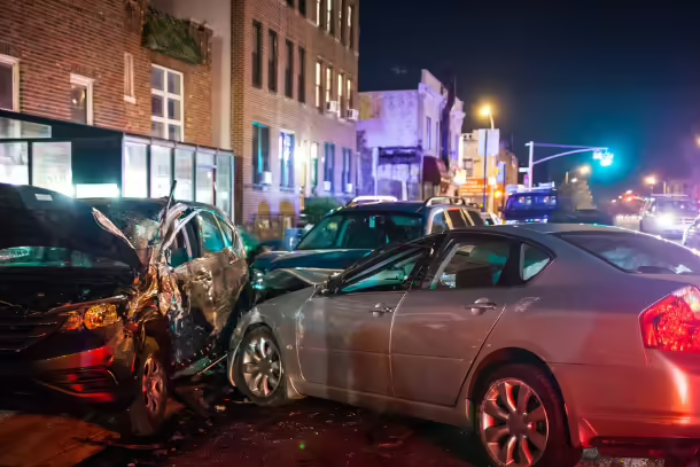
When overgrown bushes, trees, or hedges hide a stop sign from a driver’s view, the intersection can become effectively uncontrolled. A driver who cannot see a stop sign because vegetation has grown over it is not always careless, but the crash that follows can be serious. These accidents often lead to T-bone and side-impact collisions, where one vehicle strikes another at the door, an area with less protection for the person inside.
If you were hurt in an intersection crash where overgrown foliage blocked a stop sign or driver sight lines, your case may involve more than one responsible party. A Los Angeles car accident lawyer can review whether the driver, property owner, city of Los Angeles, public agency, homeowners association, property manager, or landscaping contractor may be responsible. The Law Offices of Adrianos Facchetti offers a free consultation. No fee unless we recover compensation for you.
Why These Accidents Are Different From a Standard Intersection Crash
Most intersection accident cases focus on driver behavior: did the driver see the stop sign, did they slow down, did they yield. In a blocked stop sign case, those questions are still relevant, but a second layer of liability exists that a standard intersection crash doesn’t raise.
When vegetation obscures a stop sign from the required approach distance, the intersection has a hidden defect. A driver approaching that intersection for the first time, or during a season when the tree or hedge has grown into the sign’s face, may have had no practical way to know a stop was required. The party responsible for that vegetation, whether it is a homeowner, a property manager, a public agency, or a landscaping company, may share responsibility for the crash alongside the driver.
California’s California Manual on Uniform Traffic Control Devices (California MUTCD), adopted by Caltrans, establishes standards for traffic sign visibility and clear sight distance at intersections. When those standards are violated because vegetation was allowed to grow unchecked, the resulting crash is not just a collision between two drivers. It is the foreseeable result of a maintenance failure that someone else created and had an obligation to correct.
How Overgrown Foliage Stop Sign Accidents Happen
Trees or Hedges Growing Over the Sign Face
A stop sign that was fully visible when installed may become completely obscured as a tree grows. In Los Angeles neighborhoods with mature landscaping, this process can happen gradually over months or years without anyone noticing until a crash occurs. A driver approaching from a direction where the sign is blocked by a mature tree canopy may have no indication that a stop is required until it is too late.
Seasonal Overgrowth Blocking the Sign Approach
Even in mild Los Angeles winters, spring and summer growth can dramatically reduce the visibility of a sign that was clear in the cooler months. A resident whose hedge grows into the stop sign sight line by June, creating a hidden sign that was visible in December, may have had repeated opportunities to trim the vegetation before someone was hurt.
Hedges and Shrubs at Corner Properties Blocking Sight Lines
Corner properties with tall hedges, shrubs, or privacy plantings may not block the stop sign itself but may eliminate the driver’s ability to see cross traffic before entering the intersection. A driver who stops at a stop sign but cannot see oncoming traffic because a hedge fills the sight triangle may proceed into a vehicle they could not see. This type of visibility obstruction is as dangerous as a hidden sign, and the corner property owner may share liability for crashes that happen in the sight triangle they blocked.
Commercial Landscaping Left Untrimmed at Intersection Approaches
Commercial properties along Los Angeles corridors often have significant landscaping that approaches or overhangs the public right-of-way. A business whose overgrown plantings block sight lines at an adjacent intersection and whose landscaping contractor failed to maintain clearance may share liability for crashes that happen as a result.
Public Right-of-Way Trees or Shrubs Maintained by City or Agency
Trees planted in the public parkway strip, the area between the sidewalk and the street, are often the responsibility of the City of Los Angeles Bureau of Street Services or the responsible public agency. When a city-owned tree grows into a stop sign or fills the sight triangle at an intersection, and the city fails to trim it despite its maintenance obligation, a dangerous condition of public property may exist under California Government Code § 835.
Who May Be Responsible for a Foliage-Blocked Stop Sign Accident?
The Driver Who Failed to Stop
A driver who entered an intersection without stopping may still share some responsibility even when a stop sign was blocked. California Vehicle Code § 21800 establishes right-of-way rules at uncontrolled intersections. A driver who approaches an intersection with limited or no stop sign visibility is expected to slow and yield to traffic that has the right of way. A driver who entered at full speed without any attempt to verify the intersection was clear may be found partially at fault alongside the property owner or agency.
The Adjacent Property Owner
A private homeowner or commercial property owner whose tree, hedge, shrub, or other vegetation obstructs a stop sign or intersection sight lines may be liable for negligence under California premises liability standards. The property owner’s duty extends not only to people on their property but to those foreseeably injured by hazardous conditions created by the property’s overgrowth.
California Civil Jury Instructions (CACI) No. 1000 addresses premises liability and the property owner’s duty to maintain reasonably safe conditions. A homeowner who allows a hedge to grow into a stop sign for months without trimming it, after having the opportunity to observe the obstruction, may be found to have breached that duty.
A Homeowners Association or Property Management Company
In gated communities, planned developments, and neighborhoods with CC&Rs, an HOA or property management company may be responsible for maintaining common-area landscaping and may have an obligation to keep vegetation clear of traffic control signs. An HOA that receives maintenance fees from residents but fails to trim common-area trees that block an intersection stop sign may face independent liability for the resulting crash.
The City of Los Angeles or a Public Agency
The City of Los Angeles is responsible for maintaining traffic control signs and the vegetation in the public right-of-way at most city street intersections. Under California Government Code § 835, a public entity may be liable for injury caused by a dangerous condition of its property when the entity had actual or constructive notice of the condition in sufficient time to take protective action.
A stop sign blocked by a city-maintained parkway tree that was reported through 311 before the accident or that had been obstructed for a period long enough that a reasonable maintenance program should have discovered it may meet the standard for a dangerous condition of public property claim.
Critical deadline: Claims against the City of Los Angeles, LADOT, Caltrans, or any other public entity must generally be filed within six months of the date of injury under California Government Code § 911.2. This is significantly shorter than the two-year deadline for private defendants under California Code of Civil Procedure § 335.1. If any public agency may share responsibility, contact a lawyer immediately.
A Landscaping Contractor
A private landscaping company hired by a homeowner, HOA, or commercial property to maintain the property’s trees and shrubs may carry independent negligence liability if their failure to identify and trim vegetation that was growing into a stop sign contributed to the crash. A contractor that performs regular maintenance visits and consistently fails to address an obvious obstruction of a traffic control sign may have breached the standard of care for professional landscaping in an urban residential environment.
Another Driver or Party
Comparative fault under California’s pure comparative fault system means more than one party may share responsibility. The driver who failed to stop, the property owner whose vegetation created the obstruction, and the public agency that failed to maintain the sign’s clearance may all carry a percentage of fault that collectively explains how the crash happened.
Public Road vs Private Property Claims
Whether the blocked stop sign was on a public road or a private road determines the legal framework, the deadline, and the defendant.
Public road claims: The city or public agency responsible for the sign and the right-of-way is a government defendant. The six-month government tort claim deadline under California Government Code § 911.2 applies. Liability is analyzed under the dangerous condition of public property framework. The private property owner whose vegetation crossed into the right-of-way may be an additional private defendant.
Private road or HOA road claims: Stop signs on private roads, in gated communities, or on HOA-maintained streets are the responsibility of the property owner or association. The standard two-year personal injury deadline generally applies. Premises liability governs rather than the dangerous condition of public property framework.
Mixed situations: When vegetation from a private property crosses into the public right-of-way and blocks a city-maintained sign, both the private property owner and the public agency may share responsibility. Each claim follows its own legal framework and its own deadline.
Getting this distinction right at the start of a case avoids missing the government claim window while also failing to pursue a private property owner who shares responsibility.
Evidence That Should Be Preserved After a Foliage-Blocked Stop Sign Accident
Photos of the Intersection Immediately After the Accident
Vegetation changes. A landscaping crew may be dispatched to trim the obstruction within hours of a crash report. Photos taken immediately after the accident, from the driver’s approach direction, showing exactly what was and was not visible from the road, are the most important evidence in a foliage-obstruction case. Document:
- The stop sign and whether any portion of its face is visible from the approach direction
- The vegetation blocking the sign or the sight triangle
- The distance from the driver’s approach position where the sign first becomes visible, if at all
- The physical extent of the overgrowth, including how far into the public right-of-way it extends
Before and After Documentation
If you or a witness photographed the intersection before the accident and those photos show the vegetation was already obstructing the sign, that documentation is powerful evidence of how long the condition existed.
311 Service Request Records
In Los Angeles, residents can report hazardous vegetation through 311. Prior 311 calls about the same intersection or the same overgrown property before the accident are direct evidence that the responsible party had actual notice of the problem.
City Maintenance and Inspection Records
LADOT and the Bureau of Street Services maintain records of tree trimming, sign maintenance, and 311 response history. These records may show whether the agency received complaints about the location, what inspections were conducted, and whether any maintenance was performed or deferred.
HOA and Property Management Records
For crashes involving HOA-maintained landscaping, meeting minutes, maintenance logs, and resident complaint records may show the association knew the vegetation was a problem and failed to act.
Landscaping Contractor Records
Invoices, maintenance schedules, and work logs from the property’s landscaping contractor document when the property was last serviced and what was done. A contractor who visited the property repeatedly without trimming a hedge that was growing into a stop sign may have documented evidence of their own failure to correct the obstruction.
Dashcam Footage
Your own dashcam, a witness’s dashcam, or dashcam footage from other vehicles in the area may show the approach to the intersection and what was visible to a driver at the time of the accident.
Surveillance Footage
Nearby homes, businesses, and apartment complexes may have exterior cameras covering the intersection approach. These systems typically overwrite within 30 days and sometimes sooner.
Witness Statements
Neighbors who have been aware of the overgrown vegetation for weeks or months, who have noticed the sign was blocked, or who have driven through the intersection themselves and found the sign hidden may provide testimony that establishes how long the condition existed and whether it was obvious.
A lawyer can send formal preservation letters to the city, the property owner, and the HOA requiring retention of maintenance records and complaint logs before they are discarded.
Common Injuries in Overgrown Foliage Stop Sign Accidents
Because foliage-blocked stop sign accidents frequently result in T-bone and side-impact collisions at full intersection approach speeds, the resulting injuries are among the most serious in any vehicle accident category. Door structures provide significantly less protection than front and rear crumple zones, meaning the occupant on the struck side absorbs a disproportionate share of the impact energy.
Common injuries include:
- Traumatic brain injuries from lateral head impact against the door, window, or B-pillar
- Spinal cord injuries from the sideways force of a broadside collision
- Broken ribs, pelvis, hips, arms, and legs
- Internal organ injuries from seatbelt loading during lateral impact
- Aortic injuries from high-energy side-impact crashes
- Knee and shoulder injuries
- Severe lacerations from side window glass
- Permanent disability in severe cases
- Fatal injuries
Pedestrians and cyclists at intersections where foliage blocks stop signs face the same hazard. A driver who did not see the stop sign may also not see the pedestrian in the crosswalk. Our Los Angeles pedestrian accident lawyer page covers claims for pedestrians injured at dangerous intersections.
What Compensation May Cover
Compensation in a foliage-blocked stop sign accident depends on the specific facts, the responsible parties, and the applicable insurance coverage. What may be available includes:
- Medical care and future treatment
- Lost wages and reduced earning capacity
- Pain and suffering
- Property damage
- Permanent disability or physical limitations
- Wrongful death damages where applicable
When multiple parties share responsibility, including a private property owner, an HOA, and a public agency, their separate insurance policies or government coverage may each be relevant to total recovery. This is not a guarantee of what any specific case will recover.
What to Do After a Foliage-Blocked Stop Sign Accident in Los Angeles
- Get medical care immediately, even if injuries seem manageable. T-bone and side-impact crashes frequently produce internal injuries and spinal trauma that do not show full severity at the scene.
- Call the police and make sure a report is filed. Ask the responding officer to specifically note whether the stop sign was visible from the driver’s approach direction and whether vegetation was obstructing it.
- Photograph the intersection immediately and thoroughly before anything changes: the stop sign, the vegetation blocking it, the approach sight line, and the driver’s view from the road.
- Identify the property owner of the lot whose vegetation is causing the obstruction. Note whether the vegetation is on private property, on a public parkway strip, or crossing from private property into the right-of-way.
- Report the condition through 311 to create an official record of the hazard, even after the accident has already occurred.
- Get names and contact information from witnesses, particularly neighbors who may have noticed the overgrown vegetation before the crash.
- Save your own dashcam footage before it overwrites.
- Do not give a recorded statement to any insurance company or agency representative before speaking with a lawyer.
- Contact a lawyer as soon as possible, given the potential six-month government claim deadline. If the city may have maintained the sign or the right-of-way vegetation, the clock may already be running.
How the Law Offices of Adrianos Facchetti Investigates These Claims
When we take on a foliage-blocked stop sign case, the investigation addresses who was responsible for the vegetation and how long the obstruction existed.
That means sending formal preservation letters to the city, the property owner, the HOA, and the landscaping contractor within days, requiring retention of maintenance records, 311 complaint logs, and any photographic documentation before normal schedules result in their destruction. It means photographing the intersection from the driver’s approach direction to establish what was and was not visible at the time of the crash. It means reviewing 311 records, Bureau of Street Services maintenance logs, and HOA meeting minutes for evidence that the responsible party had notice of the obstruction before the accident occurred.
We identify every party who shares responsibility: the driver, the property owner, the HOA, the landscaping contractor, and the public agency. We evaluate the dangerous condition of public property claim against LADOT or the responsible city agency where applicable. We initiate the government claim process within the six-month window so the public entity claim is not forfeited while the private property investigation is still underway.
For the broader intersection accident context, our Los Angeles missing stop sign intersection accident lawyer pages address related intersection safety claims.
FAQs About Los Angeles Overgrown Foliage Stop Sign Accidents
Who can be responsible when overgrown vegetation blocks a stop sign?
Responsibility depends on who owned and maintained the vegetation. A private homeowner, commercial property owner, HOA, landscaping contractor, or public agency may each share liability depending on where the vegetation is located and whether they had notice of the obstruction. In some cases, multiple parties share responsibility.
Can I sue the city if a city-owned tree blocked a stop sign?
Possibly. Under California Government Code § 835, a public entity may be liable for injury caused by a dangerous condition of its property when the entity had actual or constructive notice of the condition in time to take protective action. A city-maintained tree that blocked a stop sign and was reported through 311 before the accident, or that had been obstructing the sign long enough that a reasonable maintenance program should have discovered it, may meet this standard.
Is there a shorter deadline if a public agency is involved?
Yes. California Government Code § 911.2 generally requires presenting a tort claim to the responsible public entity within six months of the date of injury. This is significantly shorter than the two-year deadline for private defendants. Missing this window typically bars the claim entirely regardless of how clear the liability is.
What if the vegetation was on private property but grew over the public right-of-way?
This creates a mixed situation where both the private property owner and the public agency may share responsibility. The private property owner may be liable for allowing vegetation to cross into the right-of-way and obstruct the sign. The public agency may share liability if it had notice that the sign was being obscured by private vegetation and failed to act. Each claim follows its own legal framework and deadline.
Can I make a claim against a landscaping contractor?
Possibly, if the contractor was hired to maintain the vegetation and consistently failed to identify and trim growth that was clearly obstructing a traffic control sign. A professional landscaping contractor that makes regular visits to a property and ignores an obvious vegetation obstruction of a stop sign may have breached the standard of care applicable to professional landscaping services.
What is the most important evidence to preserve after a foliage-blocked stop sign accident?
Photos taken from the driver’s approach direction immediately after the accident, before any vegetation is trimmed, are the highest priority. Also critical are 311 complaint records showing prior notice, city maintenance logs for the specific intersection, the landscaping contractor’s service records, any neighbor witness statements about how long the vegetation has been obstructing the sign, and dashcam or surveillance footage from nearby properties.
What if the driver says they did not see the stop sign because it was hidden?
A driver who genuinely could not see a stop sign due to overgrown vegetation has a different fault profile than one who ran a clearly visible sign. However, California Vehicle Code § 21800 still requires drivers to yield at uncontrolled intersections. The driver’s inability to see the sign may reduce their fault percentage under comparative fault, but it does not eliminate it, and the party responsible for the vegetation may bear a significant share of the overall liability.
How quickly should I speak with a lawyer after a foliage-blocked stop sign accident?
As soon as possible. The six-month government claim deadline may apply if a public agency shares responsibility. Vegetation may also be trimmed within hours of a crash report, eliminating the physical evidence of the obstruction. Early involvement protects both the deadline and the evidence.
Talk With a Los Angeles Overgrown Foliage Stop Sign Accident Lawyer
If you or someone you love was injured in a crash where overgrown trees, hedges, or shrubs blocked a stop sign or intersection sight lines in Los Angeles, we are glad to review what happened and explain your legal options.
These cases involve both government claim deadlines and private property liability, and the physical evidence of the vegetation obstruction can change within hours of a crash. The sooner we can document the intersection and identify the responsible parties, the better position you are in.
Free consultation. No fee unless we recover compensation for you. Call (626) 793-8607, available 24 hours a day.
This page is for general information only and is not legal advice. California law can change. Every case depends on its own specific facts. For guidance about your situation, consult a licensed California attorney.