
Reviewed by Adrianos Facchetti, Esq. California State Bar No. 243213 Adrianos Facchetti is a California personal injury attorney representing injured people throughout Los Angeles County. This page was reviewed for California personal injury accuracy, legal clarity, and usefulness for people injured in missing stop sign intersection accidents. You can verify this attorney’s license status through the California State Bar attorney search.
Injured at an Intersection With a Missing Stop Sign in Los Angeles?
A missing, knocked-down, stolen, blocked, or faded stop sign can turn an ordinary Los Angeles intersection into an uncontrolled hazard in an instant. When a driver enters an intersection without knowing they were supposed to stop, the resulting crash is often a severe side-impact or T-bone collision, the type that produces some of the most serious injuries in any car accident category. If you or someone you love was hurt at an intersection where a stop sign was missing or not functioning as it should, your case may involve the driver who failed to yield, the City of Los Angeles or another public agency responsible for maintaining that sign, a private property owner, or more than one of these parties at the same time.
The most urgent legal issue in many missing stop sign cases is the deadline. When a public entity is responsible for the missing or damaged sign, California’s Government Claims Act generally requires filing a claim with that agency within six months of the injury under California Government Code § 911.2. That window is significantly shorter than the two-year deadline for private defendants, and missing it can bar a claim entirely regardless of how clear the liability is.
The Law Offices of Adrianos Facchetti represents people injured in missing stop sign intersection accidents throughout Los Angeles. Free consultation. No fee unless we recover compensation for you.
Why Missing Stop Sign Accidents Are Different From Regular Car Accidents
In a typical intersection accident, both drivers knew the traffic control rules and one of them violated them. A missing stop sign case is different because one driver may have had no way of knowing they were required to stop at all.
That distinction changes the legal analysis in important ways. A driver who ran a red light chose to violate a clearly visible signal. A driver who entered an intersection where the stop sign had been stolen, knocked down by a prior collision, or hidden behind overgrown vegetation may have done exactly what any reasonable person would do when approaching what appears to be an uncontrolled intersection. The question of fault in that scenario often points beyond the driver to whoever was responsible for making sure the sign was there and visible.
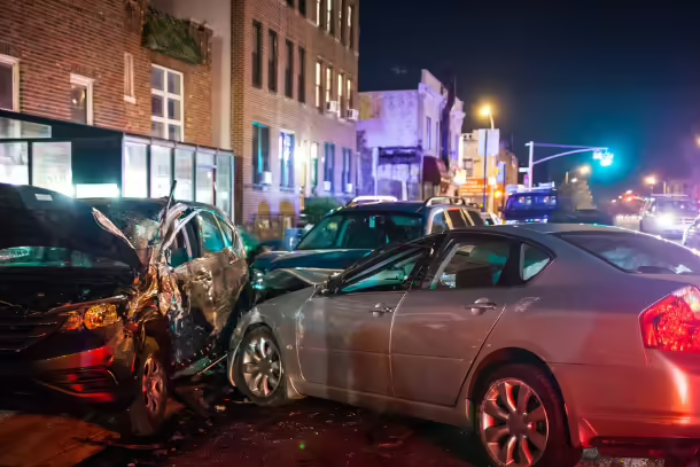
Missing stop sign accidents also frequently produce more severe injuries than standard rear-end or fender-bender crashes. When a driver enters an intersection without stopping, the resulting collision often involves full-speed lateral impact, a T-bone or broadside collision where one vehicle strikes the other at or near its door. Vehicle door structures provide significantly less protection than front and rear crumple zones, which means the occupant on the struck side absorbs a disproportionate share of the impact force.
This combination of potentially divided liability and severe injury severity makes missing stop sign cases more legally complex than they may initially appear. Our Los Angeles car accident lawyer page covers standard intersection crash claims. This page addresses what makes missing stop sign cases legally distinct.
Common Ways Missing Stop Sign Intersection Accidents Happen
Stolen or Vandalized Stop Signs
Stop sign theft and vandalism are documented problems in Los Angeles neighborhoods. A sign that was present during the morning commute may be gone by evening, leaving the intersection uncontrolled without any immediate notification to LADOT or the responsible agency. A driver approaching that intersection for the first time after the sign was removed has no indication that a stop is required.
Signs Knocked Down by Prior Collisions
When a vehicle strikes a stop sign post and the sign falls, or when the post is bent enough that the sign is no longer visible from the road approach, the intersection becomes effectively uncontrolled. Agencies that receive reports of damaged signs but delay repairs leave that hazard in place for every driver who passes through in the meantime.
Blocked or Obscured Stop Signs
A stop sign that exists but cannot be seen is as dangerous as one that is missing entirely. Overgrown trees or bushes that block the sign from the driver’s approach, utility equipment or construction staging that obscures the sign, or other signage placed too close to the stop sign can all create the same practical hazard as a missing sign. California MUTCD standards require clear sight lines and sign visibility from the required approach distance. When those standards are not met, the agency or property owner responsible for the obstruction may share liability.
Faded or Deteriorated Signs That No Longer Meet Visibility Standards
A stop sign that has faded to the point where it is not clearly visible in low-light conditions or from the required approach distance is a sign that should have been replaced. FHWA retroreflectivity standards for traffic signs require minimum levels of nighttime visibility. A sign that no longer meets those standards is a documented deficiency that the responsible agency should have identified and corrected through routine inspection.
Missing Signs at Residential Intersections and School Zones
In Los Angeles residential neighborhoods, including areas of the Eastside, the San Fernando Valley, South Los Angeles, and hillside communities with narrow streets, many intersections are controlled only by stop signs with no other traffic control. When one of those signs is missing, the intersection has no traffic control at all. Near schools, the elevated pedestrian traffic during arrival and dismissal hours makes this hazard particularly acute.
Alley Exits and Commercial Driveway Intersections
Stop signs at alley exits onto residential streets, at commercial parking lot exits onto busy corridors, and at private driveway intersections onto public roads control traffic in areas where vehicles and pedestrians regularly conflict. When these signs are missing on private property, the liability analysis shifts toward the property owner or HOA rather than the city.
Who May Be Responsible for a Missing Stop Sign Accident?
The Driver Who Failed to Yield
A driver who enters an intersection without stopping still bears some responsibility for the collision, even when a stop sign was missing. California Vehicle Code § 21800 establishes the right-of-way rule at uncontrolled intersections: the driver who arrives first, or on the right when arriving simultaneously, has the right of way. A driver who enters an uncontrolled intersection without yielding to a vehicle already in the intersection or approaching on the right may be negligent even without a stop sign present. However, the absence of a sign significantly affects how much fault is assigned and whether the agency or property owner shares liability.
The City of Los Angeles or LADOT
The Los Angeles Department of Transportation is responsible for maintaining traffic control signs at most city street intersections in Los Angeles. Under California Government Code § 835, a public entity may be liable for injury caused by a dangerous condition of its property when the entity had actual or constructive notice of the condition in sufficient time to take protective action, and the dangerous condition was a substantial factor in causing the injury.
A missing or damaged stop sign that LADOT knew about, or that had been missing long enough that a reasonable inspection program should have discovered it, may constitute a dangerous condition of public property. Prior 311 calls, maintenance work orders, and prior incidents at the same intersection are all relevant to whether the agency had notice.
Caltrans
The California Department of Transportation maintains signs at state highway intersections and certain intersections adjacent to state routes. Claims against Caltrans follow the same government tort claim process and six-month deadline.
Other Municipal Agencies
Intersections in Burbank, Glendale, Pasadena, Santa Monica, and other cities within Los Angeles County are maintained by those cities’ own transportation or public works departments. Identifying the correct public entity is essential because the claim must be filed with the right agency.
A Road Maintenance Contractor
A private contractor under contract to inspect, replace, or maintain traffic signs may carry independent liability when a known deficiency they were responsible for correcting contributed to the accident. This claim may exist alongside the government entity claim.
Private Property Owners and HOAs
Stop signs on private roads, in gated communities, at apartment complex exits, at commercial parking lot entrances, and on HOA-maintained streets are the responsibility of the property owner or association. When a stop sign on private property is missing, damaged, or not installed where one was required, the property owner or HOA may face premises liability. Our Los Angeles premises liability lawyer page covers property owner responsibility in more depth.
Commercial Property Owners
A business whose parking lot exit or driveway intersects with a public street or shared access road has a responsibility to maintain traffic control at that exit. A missing stop sign at a commercial driveway that causes a collision on the adjacent road may expose the property owner to liability alongside any public entity that shares jurisdiction over the intersection.
When City Liability or a Dangerous Roadway Condition May Matter
California Government Code § 835 creates the legal framework for claims against public entities based on dangerous conditions of their property. For a missing stop sign claim against a city or public agency, the injured person generally needs to establish that the property was in a dangerous condition at the time of the injury, that the dangerous condition created a reasonably foreseeable risk of the kind of injury that occurred, that the public entity had actual or constructive notice of the condition in sufficient time prior to the injury to have taken protective measures, and that the dangerous condition was a substantial factor in causing the injury.
Actual notice means the agency knew the sign was missing or damaged. This may be shown through 311 call logs, maintenance work orders, LADOT signal and sign repair records, or prior incident reports at the same intersection.
Constructive notice means the condition had existed long enough that a reasonable inspection program should have detected it. A stop sign that had been missing for three weeks before the accident creates a stronger constructive notice argument than one that was stolen the night before the crash.
California Civil Jury Instructions (CACI) Nos. 1100 through 1103 address dangerous condition of public property claims and define the standards applicable to these cases. The California Manual on Uniform Traffic Control Devices (California MUTCD), adopted by Caltrans, establishes standards for stop sign placement, visibility, retroreflectivity, and inspection requirements. When an agency’s sign maintenance program falls below those standards, that failure is relevant evidence of negligence.
More information on California MUTCD standards is available through Caltrans at dot.ca.gov and federal sign retroreflectivity standards through the FHWA at fhwa.dot.gov.
Public Road vs Private Property Stop Sign Claims
Whether the missing stop sign was on a public road or private property determines almost everything about how the claim works.
Public road claims involve a government entity as a defendant. The six-month government tort claim deadline under California Government Code § 911.2 applies. The dangerous condition of public property framework under § 835 governs the liability analysis. Discovery, damage presentations, and immunity defenses all operate differently than in a private claim.
Private property claims involve a property owner, HOA, or commercial operator as a defendant. The standard two-year personal injury deadline under California Code of Civil Procedure § 335.1 generally applies. The legal theory is premises liability rather than dangerous condition of public property. The property owner’s duty to maintain reasonably safe conditions for people invited onto or affected by their property is the governing standard.
Mixed situations occur when a stop sign on private property controls access to a public road or when a public intersection borders private property that obstructed the sign. These cases may involve both a public entity and a private property owner, each potentially liable through different legal theories.
Identifying which category applies and who specifically controlled the sign’s maintenance is one of the first things a lawyer examines in a missing stop sign case. Getting that wrong can mean filing against the wrong party, missing the correct deadline, or leaving a responsible defendant out of the claim entirely.
Evidence That Should Be Preserved After a Missing Stop Sign Accident
Evidence in missing stop sign cases is time-sensitive in specific ways that differ from a standard car accident.
Photos of the intersection taken immediately after the accident are critical. Document the sign post itself, whether a post exists, whether a sign is present or absent, whether a sign is bent or knocked down, and whether vegetation or other obstructions block a sign that is technically still in place. Agencies frequently send repair crews to restore missing signs within hours of an accident, so documenting the condition at the time of the crash matters significantly.
311 service request records in Los Angeles document prior complaints about traffic sign problems. Prior 311 calls about the same intersection before the accident are direct evidence of actual notice to the agency.
LADOT sign maintenance and inspection records for the specific intersection document when the sign was last inspected, what condition it was in, and whether any repair orders were issued before the accident.
Police report noting the officer’s observations about the sign’s condition at the time of the crash. Ask the responding officer specifically to note whether a stop sign was present, absent, or obstructed.
Dashcam footage from your vehicle or other vehicles approaching the intersection before the crash, which may show the absence of a sign or the driver’s approach speed and behavior.
Surveillance footage from nearby homes, businesses, or apartment complexes that may capture the intersection approach. Most systems overwrite within 30 days.
Witness statements from people who observed the intersection before or at the time of the crash, including neighbors who may have noticed the sign was missing for days or weeks.
Prior accident or incident reports at the same intersection, which may establish a pattern of dangerous conditions at that location.
Vegetation or obstruction documentation if the sign was present but blocked, including photos showing the driver’s sight line from the approach direction.
A lawyer can send formal preservation letters to LADOT, Caltrans, or the responsible agency requiring retention of maintenance logs, inspection records, and 311 data.
Common Injuries in Missing Stop Sign Intersection Accidents
T-bone and side-impact collisions at uncontrolled intersections produce some of the most serious injuries in any vehicle accident category. Common injuries include:
- Traumatic brain injuries from lateral head impact against the door, window, or B-pillar
- Spinal cord injuries from the sideways force of a broadside collision
- Broken bones including ribs, pelvis, arms, and legs
- Internal organ injuries from seatbelt loading during a lateral impact
- Hip fractures, particularly in elderly occupants
- Chest injuries from thoracic loading during side impact
- Severe lacerations from side window glass
- Soft tissue injuries including neck and back damage
- Permanent disability in severe cases
- Fatal injuries
Pedestrians struck at missing stop sign intersections face the full force of an unrestrained vehicle impact. Our Los Angeles pedestrian accident lawyer page covers pedestrian-specific claims at dangerous intersections.
What Compensation May Cover
Compensation in a missing stop sign accident case depends on the specific facts, the responsible parties, and whether a public entity is involved. What may be available includes:
- Medical care and future treatment
- Lost wages and reduced earning capacity
- Pain and suffering
- Property damage to vehicles
- Permanent disability or physical limitations
- Wrongful death damages where applicable
Claims against a public entity like the City of Los Angeles may involve specific procedural requirements. When both a public agency and a private driver share responsibility, their separate coverage sources may both be relevant to total recovery. This is not a guarantee of what any specific case will recover.
What to Do After a Missing Stop Sign Accident in Los Angeles
- Get medical care immediately, even if injuries seem manageable at the scene. Spinal injuries and internal injuries from side-impact collisions may not show their full severity right away.
- Call the police and make sure a report is filed. Ask the responding officer to specifically note whether a stop sign was present, absent, or obstructed at the intersection.
- Photograph the intersection thoroughly before leaving: the sign post, whether a sign is present or missing, any bent or knocked-down sign equipment, surrounding vegetation, and the approach sight line from the direction of the car that failed to stop.
- Take a wide-angle photo showing the full intersection layout and the approaches from all directions so the sign placement context is documented.
- Report the missing sign to 311 to create an official record, even after the accident has occurred.
- Identify the intersection precisely: the street names, the cross street, the jurisdiction, and the type of road, whether it is a city street, a state highway, a private road, or inside a gated community.
- Get names and contact information from witnesses, including nearby residents who may have noticed the sign was missing before the accident.
- Save dashcam footage from your vehicle before it overwrites.
- Do not give a recorded statement to any insurance company, city representative, or other party before speaking with a lawyer.
- Contact a lawyer as soon as possible, given the potential six-month government claim deadline. Do not assume the standard two-year window applies until you know who maintained the sign.
How Facchetti Law Investigates These Claims
When we take on a missing stop sign intersection accident case, the investigation addresses both the crash itself and the maintenance history of the sign.
That means identifying immediately which public agency or private entity was responsible for maintaining the sign so we can determine which deadline applies. It means sending formal preservation letters to LADOT, Caltrans, or the responsible agency requiring retention of sign maintenance logs, inspection records, and 311 complaint data before they are discarded on normal schedules.
We review the agency’s inspection history for the specific intersection to establish actual or constructive notice of the missing or damaged sign under California Government Code § 835. We look for prior 311 complaints, prior accidents, and prior repair orders at the same location. We document the intersection’s physical layout and sign placement requirements under California MUTCD standards to establish whether the sign met minimum visibility and placement requirements before it went missing.
For cases where a private property owner controlled the sign, we examine the property’s maintenance obligations, any prior complaints from residents or visitors, and the premises liability standard applicable to the specific property type.
For the broader car accident claim context, our Los Angeles personal injury lawyer page covers how we handle serious injury cases involving multiple defendants throughout the city.
FAQs About Los Angeles Missing Stop Sign Intersection Accidents
1. Who can be responsible for a missing stop sign accident?
Responsibility depends on who maintained the sign. The City of Los Angeles, or LADOT, is responsible for most city street intersections. Caltrans maintains state highway intersections. Private property owners, HOAs, and commercial operators are responsible for signs on private roads, parking lots, and driveways. In some cases both a public agency and the driver who failed to yield share comparative fault.
2. Can I sue the city if a stop sign was missing?
Possibly. Under California Government Code § 835, a public entity may be liable for injury caused by a dangerous condition of its property when the entity had actual or constructive notice of the condition in time to take protective action. A missing stop sign that was reported to LADOT before the accident, or that had been missing long enough that a reasonable inspection program should have discovered it, may meet that standard. Claims against the city must generally be filed within six months under California Government Code § 911.2.
3. What is a dangerous condition of public property?
Under California Government Code § 835, a dangerous condition of public property is a condition of public property that creates a substantial risk of injury when the property is used with due care in a reasonably foreseeable manner. A missing or blocked stop sign at an active intersection is a condition that courts have recognized as potentially meeting this standard. California Civil Jury Instructions (CACI) Nos. 1100 through 1103 define the legal standard a jury applies in evaluating these claims.
4. Is there a shorter deadline if a public agency may be responsible?
Yes. California Government Code § 911.2 generally requires presenting a tort claim to the responsible public entity within six months of the date of injury. This is significantly shorter than the two-year deadline for private defendants under California Code of Civil Procedure § 335.1. Failing to file within the government claim window typically bars the lawsuit regardless of how strong the facts are. If any public agency may have maintained the sign, contact a lawyer immediately.
5. What if the other driver says they did not know there was supposed to be a stop sign
A driver who enters an intersection without knowing a stop sign was required may have reduced fault compared to a driver who ran a clearly visible sign, but they are not automatically without fault. California Vehicle Code § 21800 establishes right-of-way rules at uncontrolled intersections: the driver who arrives first or from the right has the right of way. A driver who fails to yield at an uncontrolled intersection may still be negligent. The missing sign affects fault allocation, and the agency responsible for the sign may share liability, but the driver’s conduct is still part of the analysis.
6. What evidence is most important to preserve?
Photos of the intersection before the sign is replaced are the highest priority since agencies often restore missing signs within hours of an accident. Also critical are the police report noting the sign’s condition, 311 complaint records showing prior notice to the agency, LADOT maintenance and inspection logs for the intersection, dashcam footage from vehicles approaching the intersection, and witness statements from neighbors who may have noticed the sign was missing before the crash.
7. What if the missing stop sign was on private property?
When a stop sign is on a private road, in a gated community, at an apartment complex exit, or at a commercial driveway, the property owner or HOA may be responsible for its maintenance. These cases involve premises liability claims against the private property owner rather than a government claim, and the standard two-year personal injury deadline generally applies. The property owner’s duty to maintain reasonably safe conditions for people using the property or affected by it is the governing standard.
8. How quickly should I speak with a lawyer after a missing stop sign accident?
As soon as possible. The six-month government claim deadline can apply regardless of how serious the injuries are or how clear the liability appears. Agencies also repair missing signs quickly after accidents, eliminating the physical evidence of what the intersection looked like at the time of the crash. Early legal involvement protects both the deadline and the evidence before either disappears.
Talk With a Los Angeles Missing Stop Sign Accident Lawyer
If you or someone you love was injured at an intersection with a missing, blocked, faded, or damaged stop sign in Los Angeles, we are glad to review what happened and explain your legal options.
The government claim deadline makes timing more urgent in these cases than in a standard car accident. If LADOT, Caltrans, or another public agency was responsible for maintaining the sign, a six-month window may apply from the date of your injury. Agencies also repair missing signs quickly after accidents, which means the physical evidence of what the intersection looked like at the time of the crash disappears fast.
Free consultation. No fee unless we recover compensation for you. Call (626) 793-8607, available 24 hours a day. Se habla español. Falamos português.
This page is for general information only and is not legal advice. California government claims law and personal injury deadlines can change. Every case depends on its own specific facts. For guidance about your situation, consult a licensed California attorney.