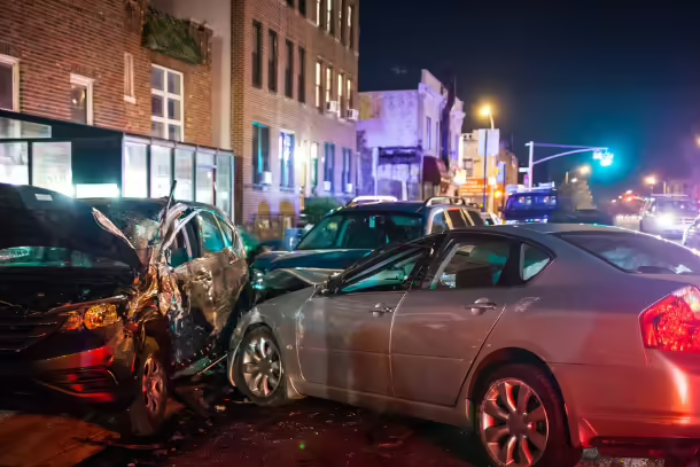



In a collision, if the battery pack is damaged, electric vehicle accidents can quickly become dangerous. Car crashes can quickly turn into fire emergencies, and the injuries sustained, such as burns, smoke inhalation, and trauma from trying to escape a burning vehicle, are often much worse than the injuries caused by the accident itself. The Law Offices of Adrianos Facchetti are Los Angeles car accident lawyers experienced in complex vehicle crash claims and ready for what these cases require.
EV battery fire cases are not your typical car accident claims. They may include the driver who caused the crash, but also the manufacturer of the vehicle, the manufacturer of the battery, a repair shop, a maintenance provider, or a charging equipment company. The vehicle, the battery data, and its entire service history become evidence that must be preserved before the car is repaired, sold, or destroyed.
When an Electric Vehicle Crash Becomes a Fire Case
Most car accidents are not fires. “Electric vehicle crashes are not the same. A lot of energy is stored in a small space in the battery pack, and if this is damaged by impact, there is a much higher risk of fire.
In an electric vehicle, a crash that in a traditional vehicle could lead to vehicle damage and soft-tissue injuries can turn into a battery fire. The fire may ignite immediately after impact, or it may ignite minutes or even hours later. Some EV fires reignite after they appear to be completely out. That evolution changes the very nature of the injury claim and the investigation needed to support it.
Battery Fires Are Not Handled Like Regular Car Accidents
Typical car accident claim factors considered are driver negligence, insurance coverage, and medical documentation. An EV battery fire case is all that and more.
The battery pack, data from its management system, the vehicle’s crash response records, prior repair history, recall history, and charging records all come into play in understanding why the fire started and if it could have been prevented. Could be corporate manufacturers, not just individual drivers. Commercial insurance policies and product liability coverage are different than personal auto insurance. These cases require a different type of investigation from day one.
Why EV Fires Can Happen After a Collision
Electric vehicle lithium-ion battery packs have individual cells that store electrical energy. In the event of a crash, the battery pack may be damaged, and those cells may be punctured, crushed, or shorted. Physical damage to the battery can set off a series of internal reactions that produce heat, gas, and ultimately fire.
There are several reasons an EV may ignite after a crash. The extent of the battery pack damage from the first impact. If the car had any previous damage, repairs, or unresolved recalls that might affect battery integrity. Was the battery management system operating properly before the crash? Whether charging equipment or maintenance created pre-existing vulnerabilities in the battery system.
Not every EV fire after a crash is caused by the impact alone. The investigation will also have to determine whether the crash, the vehicle, its battery system, or its maintenance history contributed to the fire.
Thermal Runaway and Reignition Risks After an EV Crash
When a damaged battery cell starts heating uncontrollably, that is called thermal runaway. One overheated cell can trigger the cells next to it, which trigger the cells next to those, creating a self-sustaining chain reaction that generates intense heat and fire.
In simple terms, once thermal runaway has started in a lithium-ion battery pack, it is extremely difficult to stop. Standard firefighting methods that work on conventional vehicle fires are not as effective on EV battery fires because the reaction is occurring within the battery pack itself. EV fires have been known to re-ignite hours after the initial fire appeared to be fully extinguished, sometimes during storage or transport of the vehicle.
This poses an immediate threat to crash victims. If a person survives the initial impact and manages to get out of the vehicle, they could still be injured by a fire that begins to develop after the crash. First responders and tow operators in close proximity to the vehicle after the crash may also be exposed. Everyone who comes into contact with the vehicle after the accident needs to be aware of the risk of re-ignition.
Product Liability May Be Part of the Injury Claim
When an EV fire causes serious injuries, the question is not only who caused the crash; it is also whether the vehicle or its components performed as they should have.
A battery pack that catches fire after a relatively minor collision, a thermal management system that did not respond to battery damage signals, a prior recall that was not addressed, or repairs that were performed incorrectly by a shop, any of these may support a product liability or negligent maintenance claim alongside the driver liability claim.
Possible defendants in an EV battery fire crash case may include the vehicle manufacturer, the battery manufacturer, the manufacturer of a specific battery component or management system, a repair shop that worked on the vehicle’s battery system, a maintenance provider, or a company that supplied charging equipment used on the vehicle. Our Los Angeles product liability lawyer page explains how product defect claims are evaluated alongside vehicle crash claims.
The Vehicle, Battery, and Data Must Be Preserved
Evidence in an EV battery fire case disappears faster than in almost any other type of vehicle crash. The physical components of the battery pack, the vehicle’s onboard data, and the battery management system logs need to be preserved before the car is repaired, scrapped, or released to an insurer.
What needs to be preserved and requested immediately:
The damaged vehicle and battery components. Do not authorize repair, scrapping, or release of the vehicle until a lawyer has reviewed the situation. Physical inspection of the battery pack is often necessary to determine the cause of the fire.
Battery management system data. Modern EVs record detailed data about battery state, temperature, voltage, and system warnings. This data can show whether the battery was already experiencing problems before the crash.
Vehicle event data recorder. Like conventional vehicles, most EVs have a black box that records speed, braking, and other crash parameters.
Charging records. Frequency and type of charging, supercharger versus home charger usage, and any anomalies in charging history may be relevant.
Repair and maintenance history. All prior service records, warranty repairs, and any battery-related repairs or replacements.
Recall history. Whether any open recalls affecting the battery system existed at the time of the crash.
Police report and fire report. Both the official accident report and the fire department’s incident report contain important information about how the fire started and how it progressed.
Surveillance and dashcam footage. Any available footage of the crash, the fire development, or the vehicle in the period before the crash.
Burn Injuries Can Change the Value of the Case
Burn injuries are among the most painful and medically complex injuries that exist. They require specialized treatment that standard emergency rooms are not always equipped to provide. Serious burns often require transfer to a dedicated burn center, extended hospitalization, multiple surgeries, and long-term rehabilitation.
What burn injury cases typically involve:
Acute treatment. Emergency stabilization, wound care, fluid management, and infection control in the immediate aftermath of the burn.
Skin grafts. Severe burns frequently require skin graft surgery to replace destroyed tissue. Multiple procedures over many months are common.
Infection risk. Burned skin loses its protective barrier function. Infection is a serious and sometimes life-threatening complication of significant burns.
Scarring and disfigurement. Burns can produce permanent scarring that affects both physical appearance and function, particularly when they involve the face, hands, or joints.
Nerve damage. Deep burns can damage nerves, producing permanent numbness, chronic pain, or hypersensitivity in affected areas.
Emotional trauma. Burn injury survivors frequently experience significant psychological effects, including post-traumatic stress and depression related to the injury, the treatment process, and the permanent changes to their appearance.
Long-term rehabilitation. Physical and occupational therapy to restore function in burned areas can continue for years after the initial injury.
Our Los Angeles catastrophic injury lawyer page explains how long-term and permanent injury cases are handled when multiple defendants share liability.
Who Can Be Responsible for an EV Battery Fire Crash?
Liability in an EV battery fire crash case may involve more parties than a standard car accident. The investigation determines which of the following may be responsible:
The negligent driver. The driver whose conduct caused the initial collision remains the primary source of direct liability.
The vehicle owner. If the driver was not the owner, the owner may carry independent liability depending on the circumstances.
The EV manufacturer. If the battery system, thermal management system, or crash protection design contributed to the fire, the manufacturer may face product liability.
The battery manufacturer. Many EV manufacturers source battery packs or cells from third-party suppliers. If a defective battery component caused or accelerated the fire, the battery manufacturer may be liable.
A repair shop or maintenance provider. If prior repairs or maintenance created vulnerabilities in the battery system, the shop may share responsibility for the resulting fire.
A charging equipment company. If faulty charging equipment caused pre-existing battery damage that contributed to the fire, the equipment manufacturer or provider may carry liability.
A rideshare company or commercial operator. If the EV was being used as a rideshare or commercial vehicle, the platform or employer may share liability depending on the driver’s app status and the facts of the crash.
For families who lost someone in an EV battery fire crash, our Los Angeles wrongful death lawyer page explains the legal options available to surviving family members.
What Damages Can You Collect After an EV Fire Injury?
In an EV battery fire crash case, the compensation amount can be heavy, especially when product liability is added to driver negligence and there are multiple defendants sharing liability. What might be recoverable includes:
Emergency medical services and burn care: All costs from initial response through stabilization and initial hospitalization.
Skin Grafts and Surgery: Surgical procedures, including skin graft surgeries and reconstructive procedures.
Extended care and hospital charges: Hospitalization at a burn center. Care by specialists. Ongoing wound care.
Physical therapy and occupational therapy: Rehabilitation to regain function in burned areas and other injured parts of the body.
Medical care in the future: Long-term care for permanent injuries; continued reconstruction surgery and psychological support.
Lost wages, diminished earning capacity: Lost wages in recovery, long-term impact on work ability.
Suffering and pain: Physical pain of burn injuries and emotional trauma from the injury and healing process.
Permanent scarring and disfigurement: Compensation for permanent physical changes in appearance and function.
Loss of quality of life: Changes in activities, relationships, and daily enjoyment post-injury.
Damages for wrongful death: For surviving family members, lost income, loss of companionship, and funeral expenses.
What To Do Before the EV Is Repaired, Sold, or Destroyed
The actions taken immediately after an EV battery fire crash have implications for both safety and the strength of any subsequent claim:
- Seek immediate medical attention. Burns, smoke inhalation, and trauma require immediate medical evaluation even if injuries do not seem serious at first.
- Call 911 and report the fire and crash. A police report and a fire department incident report are both important pieces of evidence.
- DO NOT TOUCH THE BURNT OR DAMAGED VEHICLE. An EV battery can reignite even after the visible fire is out. Allow trained responders to exit the vehicle.
- If possible, take photos from a safe distance. The vehicle, the fire damage, the crash scene, and any injuries you can see.
- Do not let the vehicle be fixed, scrapped, or released until a lawyer has looked into the matter and decided what should be preserved.
- Save automobile records. Registration, purchase documents, service history, charging records, and recall notices.
- Collect the names and contact details of witnesses. Other drivers, passengers and bystanders who saw the crash or fire
- Inquire about surveillance and dashcam footage. Nearby traffic cameras, business cameras, and other vehicles may have recorded the crash or the fire development.
- Do not make a recorded statement to any insurance company or manufacturer’s representative before speaking with an attorney.
- Before accepting a settlement, talk to a lawyer. These are cases involving corporate defendants and commercial insurance teams that move fast.
How the Law Offices of Adrianos Facchetti Builds EV Fire Lawsuits
The investigation of EV battery fire crash cases requires multiple potential defendants, preservation of technical evidence, and early involvement of experts who understand not only vehicle crash reconstruction but also battery fire causation. We do all that for you.
That means digging into the crash, the fire & the entire history of the vehicle to figure out all the parties that could be held responsible. Sending evidence preservation letters to manufacturers, repair shops, and insurers before critical data is lost or the vehicle is disposed of; acquiring battery management system data, vehicle event data recorder information, charging records, and repair history through the legal process. Working with accident reconstruction, fire investigators, and battery technology experts when technical documentation is needed. Going through the police reports, fire department reports, and any surveillance footage that exists. Handle all communications with corporate insurance teams and manufacturer reps. Recover the full value of the claim from all responsible parties.
Read more about Adrianos → | View our case results
Talk to a Los Angeles EV Battery Fire Crash Injury Lawyer
If you or a family member was injured in an electric vehicle crash that resulted in a battery fire in Los Angeles, a free consultation is the right place to start. These cases involve corporate defendants, technical evidence, and a vehicle that needs to be preserved before it disappears into an insurance salvage process.
No obligation. No upfront cost. No attorney fee unless we recover compensation for you.
General information only, not legal advice. Every case is different. Past results do not predict future outcomes.