
Reviewed by Adrianos Facchetti, Esq. California State Bar No. 243213. This page was reviewed for California personal injury accuracy, legal clarity, and usefulness for people injured in crashes involving vehicle hood latch failure, negligent repairs, or obstructed visibility in Los Angeles. You can verify Adrianos Facchetti’s license through the California State Bar attorney search.

When a Vehicle Hood Flies Open on the Road
A Los Angeles vehicle hood flies open accident lawyer can help determine whether your crash was caused by hood latch failure, negligent maintenance, a repair shop’s mistake, a defective part, or another driver’s conduct. When a hood suddenly pops open while a vehicle is moving, it can completely block the driver’s view of the road within seconds, leading to panic braking, an unintended lane departure, a rear-end collision, a sideswipe, or a secondary impact from another vehicle that didn’t have time to react.
This kind of crash happens on Los Angeles freeways and city streets more often than people expect, sometimes involving a recently repaired vehicle, a used car, or a rental. A Los Angeles car accident lawyer familiar with this specific mechanism can look at what actually caused the hood to open and who may be responsible.
Why Hood Fly-Open Crashes Can Be Serious
The danger here isn’t the hood itself. It’s what happens in the few seconds after it opens.
Once the hood swings up, it can fully block the windshield, leaving the driver with no forward visibility at all. Most drivers react by braking hard, swerving, or both, often at highway speed where there’s little room for error. Nearby drivers frequently don’t have enough warning to react safely, especially in dense commuter traffic where following distances are already tight.
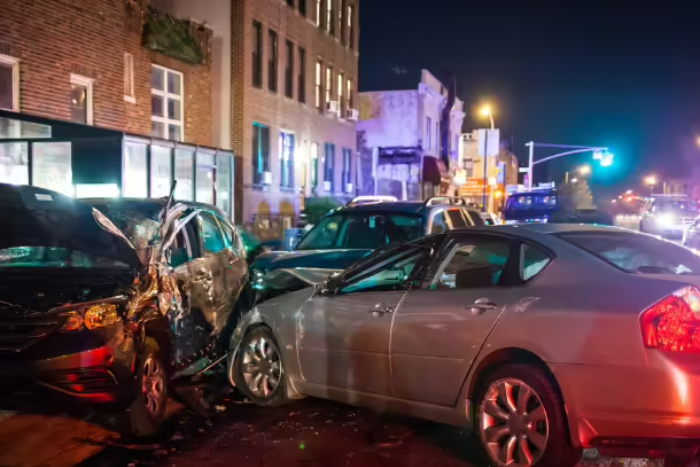
A secondary crash often follows the initial loss of control, when another vehicle strikes the car that suddenly slowed, swerved, or stopped. The physical evidence in these cases matters a great deal. Damage to the hood itself, the latch, the hinges, the windshield, and the front-end area can all help explain exactly what failed and why.
Who May Be Responsible for a Hood-Related Accident?
Responsibility depends entirely on why the hood opened in the first place, and that requires looking closely at the specific facts rather than assuming a default answer.
- The vehicle owner, if they knew the latch was faulty and continued driving
- The driver, if they failed to properly close the hood after checking under it
- A repair shop, if recent work on the vehicle left the hood or latch improperly secured
- A mechanic, if they performed that work directly
- A dealership, if service performed there involved the hood or latch
- A used car seller, if a known defect wasn’t disclosed or repaired before sale
- A rental car company, if a rented vehicle had an unaddressed latch problem
- A maintenance company, in fleet or company vehicle situations
- A parts manufacturer, if the latch itself had a design or manufacturing defect
- A hood latch manufacturer, specifically, if that component failed under normal use
- Another negligent driver, if their own conduct contributed to the crash once visibility was lost
- A public entity, in the less common situation where a road condition played a role
Not every hood fly-open crash is a product defect case. Many trace back to a simple maintenance oversight, like a hood that wasn’t fully latched after an oil change, rather than a flawed part. Figuring out which applies requires looking at who last touched the vehicle, whether the latch or hood had a documented defect, whether any warning signs were ignored, and whether another driver’s actions contributed to what happened next.
If the crash also involved negligent vehicle repairs unrelated to the hood itself, our Los Angeles tire blowout negligent repair resource explains how maintenance records and repair history may affect a similar claim.
Evidence That Can Show Why the Hood Opened
The physical condition of the hood, latch, and surrounding parts is often the most important evidence in this type of case.
- Photos of the hood, latch, hinges, windshield, and front-end damage
- Police report
- Repair records
- Maintenance records
- Inspection records
- Mechanic or repair shop invoices
- Rental vehicle records, if applicable
- Vehicle purchase records, if recently bought
- Recall information, if relevant, checked through the NHTSA recall lookup tool
- Witness statements
- Dashcam footage
- Surveillance footage
- Traffic camera footage, where available
- Insurance letters
- An independent expert inspection of the vehicle
The vehicle should not be repaired, scrapped, or altered before the hood, latch, and related parts are inspected when a defect or repair issue may be involved. Once those components are replaced or the vehicle is sent to salvage, the physical evidence needed to determine what actually failed is often gone.
Injuries and Losses After a Hood Fly-Open Crash
A sudden loss of visibility at speed can lead to a violent, unpredictable crash, and the resulting injuries can be serious.
Common injuries may include:
- Whiplash
- Soft tissue injuries
- Broken bones
- Head injuries
- Traumatic brain injuries
- Back and neck injuries
- Spinal injuries
- Internal injuries
- Cuts from glass or impact
- Emotional trauma
- Fatal injuries
Losses may include:
- Emergency medical care
- Hospital bills
- Follow-up treatment and physical therapy
- Future medical care
- Lost wages
- Reduced earning ability
- Vehicle repair or replacement
- Rental car costs
- Out-of-pocket expenses
- Pain and suffering
- Wrongful death damages, where applicable
There’s no set formula for what a claim is worth. Value depends on liability, the medical evidence, repair records, insurance coverage, the severity of your injuries, and the long-term impact of the crash. If your case involves a fatality, our Los Angeles wrongful death lawyer resource explains how those claims work under California law.
California Deadlines That May Apply
Many California personal injury claims generally must be filed within two years, under California Code of Civil Procedure § 335.1. This applies to claims against a private party, whether that’s a driver, a repair shop, or a manufacturer.
If a public entity was involved, that deadline can be significantly shorter, often six months, under California Government Code § 911.2.
Product defect and negligent repair claims often require early evidence preservation regardless of the filing deadline, since repair records, inspection history, and the physical parts themselves can disappear well before any legal deadline arrives. Deadline issues can also shift depending on exactly who turns out to be responsible, so confirming your specific timeline early matters.
Contact the Law Offices of Adrianos Facchetti After a Hood-Related Crash
If a vehicle hood flew open and caused your crash in Los Angeles, we can help you understand your legal options, including obstructed visibility, repair shop negligence, maintenance records, defective parts, insurance disputes, medical bills, and what evidence matters. A free case review costs nothing, and there’s no obligation to move forward.
During your free case review, we can:
- Review what happened
- Discuss whether maintenance, repair work, or a defective part may be involved
- Identify what evidence should be preserved
- Look at medical treatment and vehicle damage
- Answer deadline questions
- Explain what may happen next
There’s no upfront cost to work with us, and no fee unless we recover compensation for you. We won’t promise a specific outcome before understanding the facts, but we can give you a clear, honest read on where things stand. Reach out through our website to talk about your situation.