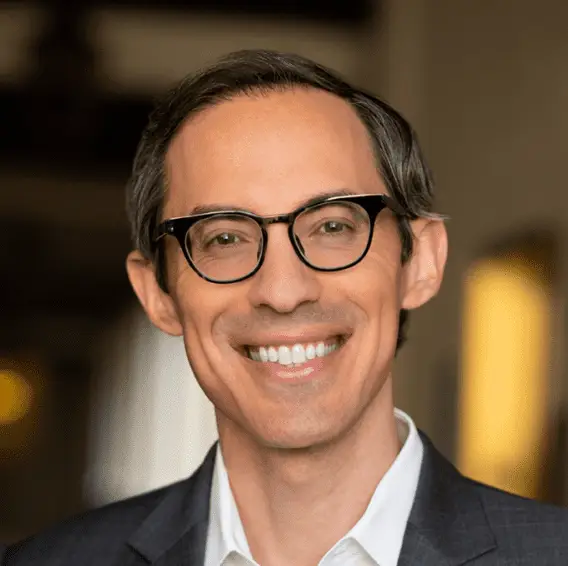

Reviewed by Adrianos Facchetti, Esq. California State Bar No. 243213. This article was reviewed for legal accuracy and general informational value.

Yes. In California, bicycles generally have to stop at stop signs, just like cars. California law gives bicyclists the same rights and duties as drivers on the road, and that includes coming to a full stop and waiting until it’s safe to go.
If you’ve heard that cyclists can treat stop signs like yield signs, that’s true in some states, but it is not the current rule in California. And if a crash happens, a missed stop sign matters, but it doesn’t automatically decide who is at fault.
Do Bicycles Have to Stop at Stop Signs in California?
The key law is California Vehicle Code § 21200. It says a person riding a bicycle on a highway has the same rights and is subject to the same rules as a driver of a vehicle, except for rules that can’t reasonably apply to bikes, like license plates.
So the general stop sign rule for drivers also applies to cyclists. Under Vehicle Code § 22450, a driver approaching a stop sign must stop at the limit line or before the crosswalk or intersection if there’s no line.
In plain terms, a cyclist at a stop sign should:
- Come to a full stop, not just slow down
- Look for cross traffic, turning cars, and pedestrians
- Yield when required
- Go only when it’s safe and lawful
A “rolling stop” on a bike is still a stop sign violation in California, the same as it would be in a car.
Is a Bicycle Considered a Vehicle Under California Law?
This is where people often get confused.
Technically, California’s general definition of “vehicle” excludes devices moved only by human power. So a regular bicycle isn’t a “vehicle” in that narrow sense.
But that difference rarely matters on the road. Section 21200 brings cyclists under the same traffic rules as drivers anyway. In practice, that means cyclists generally must:
- Obey stop signs and traffic lights
- Follow right-of-way rules
- Ride in the same direction as traffic
- Signal turns when safe to do so
It also means cyclists have the same right to use the road. Drivers have to share the lane and give cyclists room, including at least three feet when passing where possible.
Does California Have an Idaho Stop Law?
No, not under current law.
An “Idaho Stop,” sometimes called a “safety stop” or “stop-as-yield,” lets cyclists treat a stop sign like a yield sign. They slow down, check for traffic, and continue without a full stop if the way is clear. Idaho adopted this decades ago, and several other states have followed.
California has considered the idea. A bicycle safety stop bill passed the Legislature in 2021 but was vetoed by the governor, so it never became law. As of this writing, California still requires cyclists to stop at stop signs. Laws can change, so if you see claims that California now allows rolling stops for bikes, check the current Vehicle Code before relying on them.
This matters after a crash. A cyclist who assumed stop-as-yield applied in California may still be found to have violated the law.
Who Goes First When a Bicycle and Car Meet at a Stop Sign?
Bicycles and cars follow the same right-of-way rules at intersections. Under California’s general rules:
- First to arrive, first to go. At an all-way stop, whoever stops first usually proceeds first.
- Arrive at the same time? Generally, the vehicle on the left yields to the vehicle on the right under Vehicle Code § 21800.
- Two-way stop? If only you had a stop sign, you would have to stop and then yield to cross traffic that is close enough to be a hazard.
- Turning? A driver or cyclist turning left generally yields to oncoming traffic that’s close enough to be a hazard.
- Pedestrians. Drivers and cyclists must yield to pedestrians in crosswalks.
These are starting points, not absolute rules. Real intersections involve blocked views, speed, hand signals, and people waving each other through. If a driver waves a cyclist forward and another car hits the cyclist, for example, fault may get complicated fast.
The safest habit for everyone is the same: stop fully, make eye contact when possible, and don’t assume the other person will yield.
What If a Cyclist Runs a Stop Sign and Causes a Crash?
Running a stop sign is a traffic violation. In a lawsuit, a violation like that can be used as evidence of negligence. California law allows a jury to presume negligence when someone breaks a safety law and that violation causes the kind of harm the law was meant to prevent.
But a violation doesn’t decide everything. The real question is what actually caused the crash.
Consider two examples:
- A cyclist rolls through a stop sign and pulls directly in front of a car that had no time to react. The cyclist’s violation may be the main cause.
- A cyclist rolls through a stop sign, but the driver who hits them was speeding in a different direction and looking at a phone. Both people may share responsibility.
Insurers sometimes treat a cyclist’s rolling stop as the end of the discussion. It often isn’t. The driver’s speed, attention, lane position, and whether they had time to avoid the crash all still matter.
The same applies the other way. If a driver runs the stop sign and hits a cyclist, the driver’s violation can be strong evidence of negligence, but the driver may still argue the cyclist contributed.
Can a Cyclist Still Recover Compensation If They Did Not Stop?
Often, yes. California uses comparative fault. Fault can be divided between people based on how much each one contributed, and an injured person can recover even if they were partly to blame.
Hypothetical example: A cyclist fails to stop fully at a stop sign. A driver approaching the intersection is going well over the speed limit while texting. A jury might decide the cyclist was 30% at fault and the driver 70%. If the cyclist’s losses were $100,000, their recovery would be reduced by 30%, to $70,000.
Those numbers are only an illustration. Real fault percentages depend on the evidence, and many cases settle through negotiation rather than a jury decision.
The takeaway: a cyclist who didn’t stop shouldn’t assume they have no claim, and a driver shouldn’t assume the cyclist’s violation clears them completely.
What Evidence Helps Determine Fault in a Bicycle Intersection Crash?
Intersection crashes often come down to a few seconds, so evidence matters. Useful evidence can include:
- Traffic camera footage
- Dashcam footage from either vehicle or a passing car
- Surveillance video from nearby businesses or homes
- Witness statements
- Photos of the intersection from each direction
- Where the stop signs are placed and whether they’re visible
- Damage to the bicycle and the vehicle, which can show angle and speed
- Skid marks or debris
- The police report
- Medical records showing the type of injuries
- Phone records, where legally obtainable, if distraction is disputed
- Road layout and sightlines, such as parked cars or hedges blocking views
Business cameras are often recorded over within days. If a camera may have caught the crash, acting quickly can make a real difference.
Do E-Bikes Have to Stop at Stop Signs in California?
Yes. California treats Class 1, Class 2, and Class 3 electric bicycles as bicycles for most traffic purposes, so riders generally follow the same rules of the road, including stopping at stop signs.
E-bikes can also face extra rules. For example, Class 3 e-bikes have age and helmet requirements, and some trails or paths limit where certain classes can ride. But on public roads, the stop sign rule is the same.
What Should You Do After a Bicycle Accident at a Stop Sign?
- Get medical care. Head and neck injuries don’t always show up right away.
- Call law enforcement when appropriate, especially if anyone is hurt.
- Photograph the intersection from every direction.
- Photograph the stop signs and road markings, including limit lines and anything blocking the view.
- Get witness names and phone numbers.
- Preserve damage evidence. Don’t repair or toss your bike or helmet before photographing them.
- Save medical and insurance records.
- Avoid guessing about fault. Stick to what you saw. Statements like “I think I rolled the stop” can be used later even if they aren’t accurate.
- Consider legal review if injuries are significant or fault is disputed.
When to Talk With a California Bicycle Accident Lawyer
Not every bike crash needs a lawyer. Legal review may make sense when:
- Injuries are serious
- Fault is disputed
- The driver claims the cyclist ran the stop sign
- Witness accounts conflict
- The driver left the scene
- A commercial or delivery vehicle was involved
- The insurer denied the claim
- You’re being told you share most of the blame
The Law Offices of Adrianos Facchetti helps injured cyclists throughout Southern California, including as a Los Angeles bicycle accident lawyer. If you were hurt in the Burbank area, our Burbank personal injury lawyer team can review your situation.
If the crash also involved car-to-car issues, such as a multi-vehicle collision at the intersection, our Los Angeles car accident lawyer team handles those claims as well.
Free consultation. No fee unless we recover compensation for you. Call (626) 793-8607, available 24 hours a day. Se habla español. Falamos português.