If you drive around Burbank often, you probably have your own list of Burbank dangerous intersections that make you grip the wheel a little tighter. School traffic, studio workers rushing to work, people hunting for parking on Magnolia or Burbank Boulevard, it all adds up.
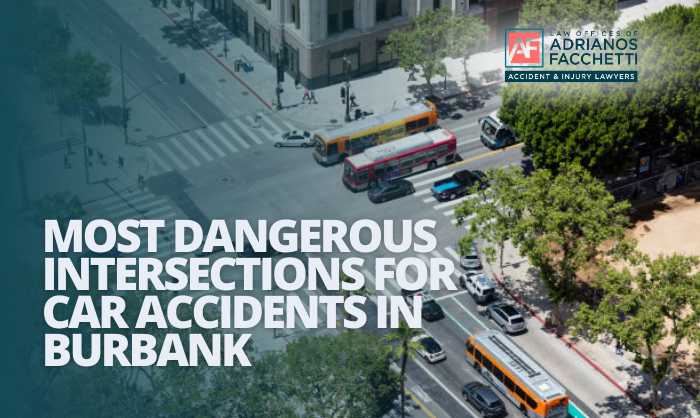
Most days you get home without a problem. But some intersections see more close calls, horn honks, and real crashes than others. Knowing which areas tend to be risky can help you slow down, watch a little more carefully, and understand what happened if you were already in a collision there.
If you were hurt at a busy Burbank intersection and you’re now dealing with pain, bills, and calls from insurance, our Burbank injury law firm can walk you through your options and help you figure out what to do next.
Why Some Burbank Intersections Feel So Dangerous
Not every intersection is built the same way. A small four-way stop in a quiet neighborhood is one thing. A wide crossing with several lanes, turn pockets, and people trying to dart through on yellow is something else entirely.
Intersections in Burbank are more likely to be trouble spots when:
- There are lots of lanes, turns, and signs competing for your attention
- Drivers have to make left turns across steady oncoming traffic
- There are crosswalks, bus stops, or schools nearby
- Parking lots, studio entrances, and side streets feed straight into the main road
- People are looking at phones or navigation instead of the light in front of them
When you mix all of that with rush-hour traffic or someone running late, it is not surprising that crashes happen.
Examples of Busy, High-Risk Spots in Burbank
Crash reports and day-to-day driving both show a pattern: certain types of intersections in Burbank see more wrecks.
You can adjust the details below to match police data, public reports, or your own case history, but these are the kinds of locations that often cause problems.
Intersections Along the Main Burbank Corridors
Streets like Magnolia Boulevard, Burbank Boulevard, Olive Avenue, and San Fernando Boulevard carry steady traffic from morning to night. They are lined with restaurants, coffee shops, and small businesses, so cars are always turning in and out.
Common issues in these areas include:
- Rear-end crashes when a driver slams on the brakes at a changing light
- Left-turn collisions when someone misjudges how fast oncoming cars are moving
- Pedestrian close calls and injuries near crosswalks and bus stops
Even when the speed limit isn’t very high, a side-impact crash at one of these corners can cause serious injuries.
Intersections Near Studios and Office Buildings
Studio and office areas bring their own mix of traffic:
- Cars entering and exiting parking structures
- Delivery trucks stopping near the curb
- Rideshare drivers picking up and dropping off passengers
Lines of sight get blocked, and drivers sometimes pull out of a driveway or side street without a clear view of what is coming. That can lead to side-swipes, low-speed T-bone collisions, or crashes right at the driveway mouth rather than in the middle of the intersection.
Intersections Close to Schools and Neighborhood Streets
Intersections around schools and dense neighborhoods can seem calm at midday and then become hectic during drop-off and pick-up times.
You often see:
- Parents stopping suddenly to let children in or out of cars
- Kids crossing the street or weaving between parked vehicles
- Parked cars narrowing the road and hiding people from view
Even a slow-moving crash in these spots can cause real harm, especially to children or pedestrians. Drivers are expected to be extra careful here, but distraction is still a big problem.
Intersections With Complicated Turn Lanes
Some Burbank intersections have several different turn pockets, shared through-and-turn lanes, or markings that aren’t obvious at first glance. When drivers are not sure which lane they should be in, they may:
- Change lanes at the last second to avoid missing a turn
- Turn from the wrong lane and cut across another car
- Block the intersection because they misjudged the timing of the light
If you were hurt at one of these confusing spots, photos, diagrams, and even a simple sketch can help show why the crash happened and who had the safer path.
What Kinds of Crashes Happen at These Intersections?
Dangerous intersections in Burbank tend to produce the same types of collisions over and over:
- Rear-end collisions. A driver is following too closely, looking down at a phone, or racing the yellow light, and they hit the car in front.
- Side-impact (T-bone) crashes. Someone runs a red light, rolls through a stop sign, or turns left when they do not have enough time.
- Left-turn accidents. Drivers misjudge the gap in traffic or assume the other car will stop.
- Pedestrian and cyclist injuries. A driver fails to yield at a crosswalk, turns right while only checking for cars, or passes too close to someone on a bike.
These crashes often lead to neck and back injuries, concussions, broken bones, and soft-tissue damage. Pain may not show up fully until hours or even days later, which is why seeing a doctor after a collision is so important.
Why Intersection Evidence Matters in a Burbank Car Accident Case
When a crash happens at a busy intersection, the physical layout of the area tells part of the story. It is not just “Car A hit Car B.” The question is how the crash happened and whether the design of the intersection and the choices of each driver played a role.
Useful evidence can include:
- Photos and short videos of the intersection, the traffic lights, the position of vehicles, and any skid marks
- Witness statements from people who saw speeding, red-light running, or phone use
- The police report describing the scene and any traffic citations
- Footage from nearby traffic cameras or business security cameras, if it can be obtained quickly
A Burbank car accident lawyer can help track this down, send preservation letters, and work through the details so important evidence is not lost.
What You Can Do After a Crash at a Busy Burbank Intersection
If you are involved in a collision at one of these intersections, try to:
- Get to a safe place if you can and call 911 if anyone is hurt.
- Exchange information with the other driver and speak with any witnesses.
- Take photos or video of the cars, the intersection, the signals, and anything in the road that seems important.
- Get medical care as soon as possible, even if you think you just “got shaken up.”
- Be careful with what you say to insurance adjusters until you understand your rights. Short, factual answers are usually better than long, detailed conversations.
Those first steps can make a big difference later when you’re trying to show what really happened and why the other driver should be held responsible.
When It Makes Sense to Talk With a Lawyer

After a serious crash, you may feel pulled in a lot of directions at once. You might be trying to get your car fixed, keep up with work, and fit in doctor visits around everything else.
It may be time to speak with a lawyer if:
- Your pain is not going away, or your doctor is recommending ongoing treatment
- You have missed work or had to change your routine because of the injury
- The insurance company is blaming you or pushing for a quick settlement that doesn’t feel fair
- You’re simply not sure what your case might be worth
A Burbank car accident lawyer can review what happened at the intersection, look at the evidence, explain how California law applies, and deal with the insurance company for you. That way you can focus on healing while someone else handles the legal side.
If your crash happened at one of Burbank’s busy intersections and you want to know what your options are, you can contact the Law Offices of Adrianos Facchetti for a free consultation and get clear, direct answers about your situation.