You were just trying to go about your day when a dog bite in California turned everything upside down, now you’re hurt, facing bills, and wondering if the owner’s behavior was so bad that they should be punished, not just forced to compensate you.
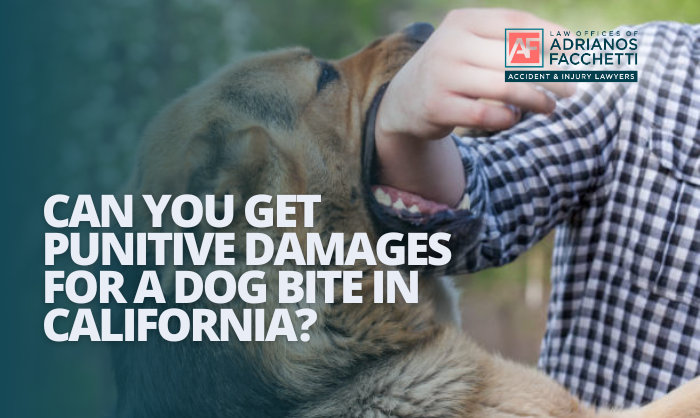
Maybe this isn’t the first time the dog has attacked, or you’ve heard neighbors talk about the dog's dangerousness and negligence, and you’re asking yourself whether a dog bite lawsuit could lead to more than standard damages in your dog bite case.
If you’re starting to search for answers or talk to dog bite lawyers in Burbank, CA, you’re already on the right track, the Law Offices Of Adrianos Facchetti can help you understand what’s possible and what punitive damages really mean for your situation.
Understanding California Dog Bite Law
When a dog bite injury happens in California, you don’t have to prove the dog owner was careless because the state’s strict liability rules under California's dog bite statute usually apply. That means your focus can be on how the dog bites affected your life and what you need to be made whole, not on arguing about fault in a personal injury case.
You may be able to recover compensatory damages like medical bills, lost income, and general damages for pain and emotional harm, along with special damages for more specific costs tied to the dog attack. Knowing this early helps you talk more confidently with a personal injury attorney and push back if an insurance company tries to downplay your claim.
When Can a Dog Bite Victim Seek Punitive Damages?
Punitive damages are different from the usual compensation because they are meant to punish especially bad conduct, not just repay you for what you lost. In a serious dog bite in California, they may come into play when a dog owner’s behavior goes far beyond a simple mistake and shows a stronger disregard for other people’s safety.
Under California Civil Code § 3294, a court can only consider punitive damages if there is clear and convincing evidence of that egregious misconduct. This helps you and your personal injury attorney decide whether your dog bite lawsuit should focus mainly on compensatory damages or also push for punishment that could send a message to the dog owner and their insurance company.

What the Dog Owner Must Have Done for Punitive Damages
To get punitive damages, it’s not enough to show that a dog attack caused puncture wounds or other injuries; you also have to show that the dog owner’s conduct crossed a line. This is where the law looks closely at how the owner acted before and during the dog bite injury and whether they knew their choices put others at risk.
- Clear explanation of “oppression, fraud, or malice” under California law and how these ideas apply in a dog bite case
- Conduct by a dog owner that may justify a punitive damages claim based on serious disregard for safety
- Why prior knowledge of the dog’s vicious behavior or past attacks matters so much
- How courts look at whether the owner showed “conscious disregard” for the safety of others, not just simple negligence
When you understand these standards, you can better see whether your situation is likely to support punitive damages in addition to compensatory damages. This also helps you give your personal injury attorney the kind of details they need to build a stronger personal injury case under strict liability rules.
Types of Damages in a California Dog Bite Case
When you’re dealing with a dog bite in California, it helps to know what you can actually be compensated for, not just in theory but in real life. That way, when an insurance company makes an offer, you have a better sense of whether it actually reflects what you’ve gone through.
In most dog bite cases, you can pursue:
- Economic damages such as medical bills, lost income, and future care if you need ongoing treatment or surgery
- Non-economic damages such as pain, suffering, and emotional trauma that affect your daily life and relationships
Punitive damages are different because they are meant to punish the dog owner for serious misconduct and are added on top of these regular damages. Recent data shows that the average dog bite settlement in California in 2023 was around $68,125, and most of that was compensatory, which tells you that punitive damages are possible but not common.
What You Should Do to Support a Punitive Damages Claim
Right after a dog bite, it’s easy to focus only on the pain and getting through the day, but the steps you take early can make a big difference in any claim later. Simple actions can help show not just that you were hurt, but that the dog owner should be held fully responsible for what happened.
To protect your rights, it helps to:
- Get medical help quickly, take photos of your injuries and the scene, and report the incident to the proper authorities
- Save anything that shows the owner’s reckless or knowing behavior, such as messages, prior warnings, or witness information
- Contact a California dog bite lawyer early so they can guide you, deal with the insurance company, and help you avoid mistakes
- Ask about prior complaints or reports involving the same dog, since proof of past issues can be important when arguing for punitive damages
Taking these steps shows that you’re serious about your case and gives your lawyer more to work with if they believe a punitive damages claim makes sense in your situation.
How Punitive Damages Are Determined in California
When a court looks at punitive damages in a dog bite case, it’s not just asking, “Were you hurt?” but “How bad was the dog owner’s conduct, and what will really get their attention?” This helps make sure any punishment actually fits what happened and has a real impact.
Courts and juries typically look at things like:
- The seriousness of the conduct, was it a careless mistake or a pattern of risky behavior?
- The harm caused, including the physical and emotional impact on you
- The defendant’s ability to pay, so the amount is enough to matter but not unfair
There are also constitutional limits that keep awards from being excessive, and judges can reduce punitive damages if they think a jury went too far. Patterns of prior incidents or repeated negligence by the dog owner often carry a lot of weight, because they show this wasn’t just a one-time slip.
Punitive damages can only be awarded if the owner is first found liable for compensatory damages, so your core case has to be solid before this even becomes an option. Knowing this helps you and your lawyer stay focused on building a strong foundation before asking the court to consider extra punishment.
Do All California Dog Bite Cases Involve Punitive Damages?
Most dog bite cases in California focus only on compensatory damages, like medical bills, lost income, and pain and suffering. That’s because the law reserves punitive damages for conduct that goes beyond carelessness into more serious wrongdoing.
Punitive damages are rare and usually only come into play when there is extreme or repeated misconduct by the dog owner. An experienced lawyer will look at the facts, the dog’s history, and the owner’s choices to decide whether it makes sense to pursue them in your case.
Legal data suggests that punitive awards happen in only a small percentage of verdicts, and many cases settle long before a jury ever decides on punishment. This doesn’t mean your case isn’t important; it just means a fair outcome often centers on strong compensatory damages, with punitive damages as a possible extra in the right situations.
Contact the Law Offices of Adrianos Facchetti for a Free Consultation
If you were bitten by a dog and you’re not sure what your rights are, you don’t have to sort it out alone. The Law Offices Of Adrianos Facchetti can review what happened, explain your options, and help you decide whether punitive damages might be part of your dog bite claim.
Take the first step toward justice. Contact us today for a free, no-obligation evaluation of your dog bite claim and find out if punitive damages may apply.
You can reach the Law Offices Of Adrianos Facchetti at (626) 793-8607 for a free case evaluation, so you can get clear answers and a plan for what to do next.